Call us now :07971549307
 Send Inquiry
 Send Inquiry
Phosphoric Acid
Phosphoric Acid Specification
- HS Code
- 28092010
- Boiling point
- 158C (decomposes)
- Smell
- Odorless
- Taste
- Sour
- Refractive Rate
- 1.433
- Molecular Formula
- H3PO4
- Molecular Weight
- 98.00 g/mol
- Structural Formula
- H-O-P(O)(OH)2
- Classification
- Inorganic Acid
- Inorganic Acid Types
- Phosphoric Acid
- Grade
- Industrial/Food Grade
- Purity
- 85%
- Application
- Food Industry, Fertilizer, Water Treatment, Chemical Synthesis, Metal Treatment
- Appearance
- Clear, Colorless Liquid
- CAS No
- 7664-38-2
- EINECS No
- 231-633-2
- Other Names
- Orthophosphoric Acid
- Usage
- Used in food and beverage as acidulant, in fertilizers, for water treatment, metal surface treatment, and as a chemical reagent
- Melting Point
- 21C
- Density
- 1.685 Gram per cubic centimeter(g/cm3)
- Solubility
- Miscible with water
- Raw Material
- Phosphate rock
- Shelf Life
- 2 years
- Storage Conditions
- Store in cool, dry, well-ventilated place, away from incompatible substances
- UN Number
- 1805
- Manufacturing Process
- Wet process (sulfuric acid digestion of phosphate rock)
- Decomposition Temperature
- >200°C
- pH (1% Solution)
- 1.5 - 2.5
- Hazard Class
- 8 (Corrosive)
- Packaging
- Available in HDPE drums, IBC totes, bulk tankers
- Viscosity
- 23 cP at 20°C
About Phosphoric Acid
Phosphoric acid (also known as orthophosphoric acid or phosphoric(V) acid) is a mineral (inorganic) acid having the chemical formula H3PO4. Orthophosphoric acid molecules can combine with themselves to form a variety of compounds which are also referred to as phosphoric acids, but in a more general way.Orthophosphoric acid is a non-toxic acid, which, when pure, is a solid at room temperature and pressure.In addition to being a chemical reagent, phosphoric acid has a wide variety of uses, including as a rust inhibitor, food additive,dental and orthop(a)edic etchant, electrolyte, flux, dispersing agent, industrial etchant, fertilizer feedstock, and component of home cleaning products.The most common source of phosphoric acid is an 85% aqueous solution; such solutions are colourless, odourless, and non-volatile. Food-grade phosphoric acid (additive E338[11]) is used to acidify foods and beverages such as various colas. It provides a tangy or sour taste.Phosphoric acid and its derivatives are pervasive and find many niche applicationsPhosphoric acid may be used to remove rust by direct application to rusted iron, steel tools, or other surfaces. Phosphoric acid is used in dentistry and orthodontics as an etching solution, to clean and roughen the surfaces of teeth where dental appliances or fillings will be placed.
Wide Spectrum of Industrial Applications
Phosphoric Acid is indispensable in various industries, including food and beverages as an acidulant, agriculture for manufacturing fertilizers, water purification, and in metal surface treatment processes. Its high purity ensures suitability in both industrial and food-grade applications, while its chemical stability supports safe long-term use.
Safe Storage and Handling
This inorganic acid should be stored in tightly sealed HDPE drums, IBC totes, or bulk tanks in a cool, dry, and well-ventilated space, away from incompatible materials. Due to its corrosive nature (Hazard Class 8, UN 1805), comprehensive safety measures, including use of protective gear and proper containment, are essential during handling.
Distinct Physical and Chemical Properties
Phosphoric Acid appears as a clear, colorless liquid with a molecular formula H3PO4 and a molecular weight of 98.00 g/mol. It is miscible with water, has a density of 1.685 g/cm, refractive index of 1.433, melting point of 21C, and decomposes above 158C. These properties ensure its effectiveness and versatility in diverse applications.
FAQs of Phosphoric Acid:
Q: How is phosphoric acid typically produced?
A: Phosphoric acid is primarily manufactured via the wet process, which involves the sulfuric acid digestion of phosphate rock. This widely used technique yields high-purity acid suitable for a range of industrial and food-grade applications.Q: What industries or applications commonly use phosphoric acid?
A: This acid is extensively used in the food industry as an acidulant, in fertilizers for agriculture, in water treatment, for metal surface preparation and cleaning, and as a versatile chemical reagent in synthesis and laboratory applications.Q: When is the best time to use phosphoric acid for fertilizer production?
A: Phosphoric acid is suitable for year-round use in fertilizer production due to its stable properties and shelf life. However, application timing may be optimized based on specific agricultural cycles and crop requirements.Q: Where should phosphoric acid be stored to ensure longevity and safety?
A: For optimal longevity and to maintain safety standards, phosphoric acid should be stored in tightly sealed HDPE drums, IBC totes, or bulk tankers within a cool, dry, and well-ventilated area, away from incompatible materials.Q: What precautions are necessary when handling phosphoric acid?
A: Since phosphoric acid is a corrosive substance (Hazard Class 8, UN 1805), handlers should use appropriate personal protective equipment and follow safety protocols, such as avoiding contact with eyes, skin, and incompatible substances, to minimize risk.Q: How is phosphoric acid beneficial for water treatment?
A: In water treatment, phosphoric acid serves as an effective agent for controlling pH, preventing corrosion, and reducing scale formation, thereby contributing to safer and more efficient water systems.Q: What are the benefits of using high-purity (85%) phosphoric acid?
A: High-purity phosphoric acid guarantees reliability in critical applications, such as the food industry or chemical synthesis, and ensures consistent results, safety, and compliance with regulatory standards.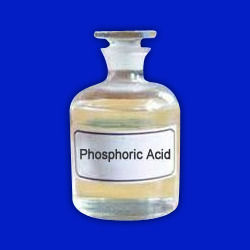
Tell us about your requirement

Price:
Quantity
Select Unit
- 50
- 100
- 200
- 250
- 500
- 1000+
Additional detail
Mobile number
Email

More Products in Acids Category
Acid Thickner
Price 90 INR / Liter
Minimum Order Quantity : 10 Liters
Appearance : Yellow liquid
Purity : Not available
Other Names : Acid thickener
Application : Used as a thickener for acidbased cleaning products
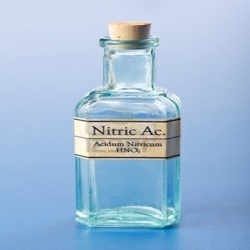
Nitric Acid
Appearance : Colorless liquid
Purity : 68% 70%
Other Names : Aqua fortis Spirit of nitre
Application : Used in fertilizers explosives and industrial processes
2Ethyl Hexanoic Acid 2EHA
Appearance : Clear, Colorless to Slightly Yellow Liquid
Purity : 99% min
Other Names : 2Ethylhexanoic Acid; Octanoic Acid, 2Ethyl; EHA
Application : Paints, Lubricants, Plasticizers, PVC Stabilizers, Metal Soaps, Alkyd Resins
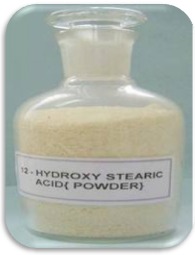
Hydroxy Stearic Acid
Appearance : Powder
Purity : Not available
Other Names : Hydroxy Stearic Acid
Application : Not available

 Send Inquiry
Our Products

7/1, Lords Building, Room No. 506, Lord Sinha Road, Kolkata - 700071, West Bengal, India

Mr Raghav Goenka
(Director )
Mobile :07971549307
 Send Inquiry
 Send SMS
Developed and Managed by Infocom Network Private Limited.
